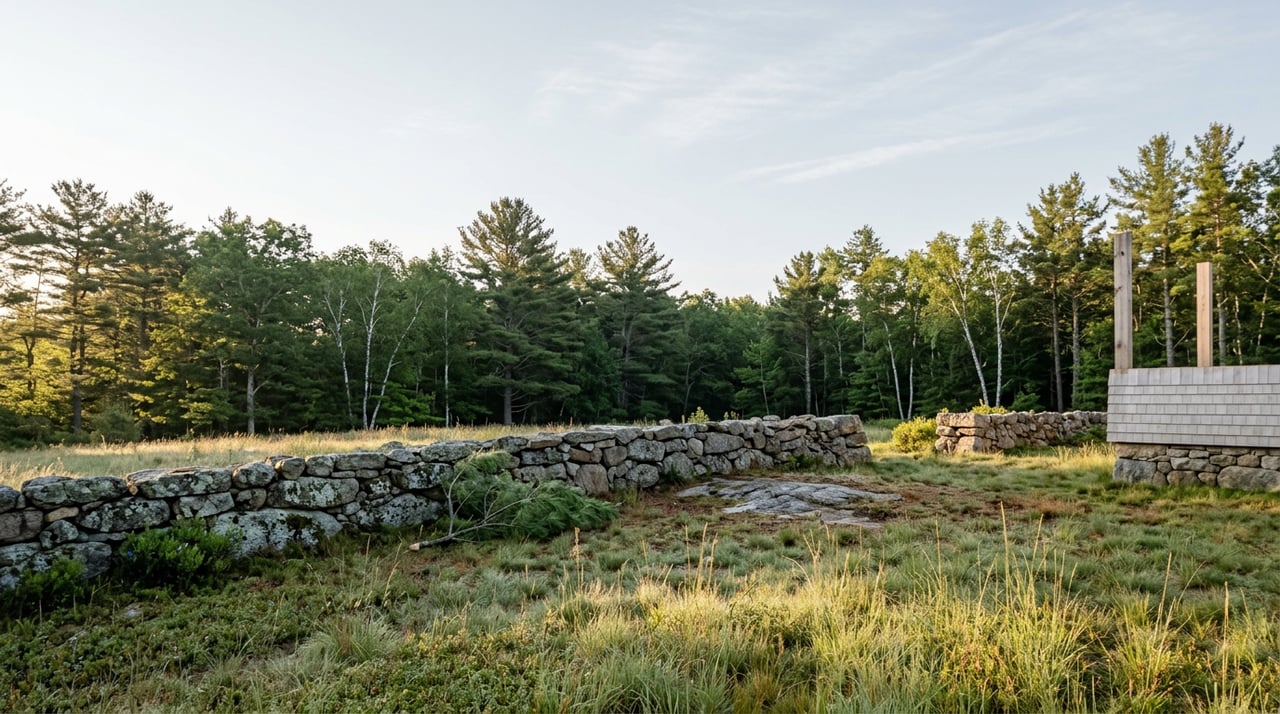
As of September 2026, a wooded 6.81-acre lot on Winona Road in Meredith is listed for $225,000, tagged as close to snowmobile trails, shopping, and skiing. The description reads like most Lakes Region land listings: level terrain, privacy, room to build a year-round home or a seasonal retreat. The listing also includes the line: buyer to pay current use penalty at closing.
It is not a typo, and it is not unique to that one parcel. A 146-acre timber lot on the market elsewhere in Meredith carries the identical phrase. So does a 17.20-acre parcel off Eagle Ledge Road. Three separate listings, same sentence. That repeated wording flags a cost buyers should consider alongside the listing price when planning to turn enrolled land into a home site.
What "Current Use" Actually Does to a Parcel
Most large undeveloped lots in Meredith, and across New Hampshire generally, are enrolled in the state's Current Use program. Under this voluntary program, the Forest Society says land of ten or more acres that qualifies as forest, farm, or unproductive land, along with wetlands of any size, gets assessed at its income-producing value rather than its market value. A parcel that could fetch thousands of dollars an acre as a building site might be taxed instead at its income-producing value, depending on soil type and documentation, because on paper it is still growing timber or standing open.
More than half of New Hampshire's land area is enrolled this way. It is the reason a lot of Meredith's inventory of larger parcels carries a property tax bill that looks almost too good to be true. The land is not being taxed as a future house site. It is being taxed as a woodlot.
That low tax bill comes with a condition. The moment the land is physically disturbed for something the program does not recognize, cutting a driveway, installing a septic system, pouring a foundation, the enrolled acreage in question stops qualifying. And when it stops qualifying, the state's Land Use Change Tax kicks in.
The Moment the Bill Actually Shows Up
The Land Use Change Tax is a one-time charge equal to 10 percent of the land's full market value at its highest and best use, not its current use value, assessed at the point the disqualifying change happens. The Town of Meredith's own assessing office guidance is direct about how this gets billed: the tax is issued within 18 months of the disqualifying event, under the state's administrative rule CUB 307. That window matters. It means the bill does not necessarily arrive at the closing table. It can arrive well after the new owner has already broken ground, sometimes close to a year and a half later, as a tax notice from the town.
Meredith's assessing office is equally direct about what the tax actually is. In their own words:
The Land Use Change Tax imposed is a tax on the change of use of the land and not a tax on the land itself.
That distinction is the whole mechanism in one sentence. You are not being taxed for owning the land. You are being taxed for the specific act of converting it from open space to a building site
Why the Phrase Points at the Buyer
Sellers of enrolled land in Meredith are not passing off some unrelated cost. They are stating the obvious outcome of the sale itself. If a buyer purchases enrolled acreage with the intention of building on it, the buyer is the one who will eventually disturb the land, so, under RSA 79-A:7, the buyer is the one the tax law will eventually bill. The listing language is a disclosure, telling a prospective buyer up front what the state already has planned for whoever holds title when the bulldozer arrives.
For a buyer coming from a state without anything like this program, that is still a real shift in how to think about the purchase price. The $225,000 figure on the Winona Road listing describes the cost of the raw acreage under current use. It does not describe the cost of a home site on that acreage. The gap between those two numbers is the Land Use Change Tax, and it is calculated against fair market value, not the discounted current use value the seller has been paying taxes on for years.
To put the scale of that gap in perspective, a 50-acre woodlot assessed at roughly $3,000 an acre in market value, about $150,000 total, might carry a current use value while enrolled. The Land Use Change Tax reverses that discount the moment it disqualifies, applying 10 percent to the full market figure, not the current use figure. On a smaller building footprint the dollar amount is smaller too, but the ratio is the same.
The One Piece of Good News
The tax does not usually apply to the whole parcel. Meredith's assessing office removes from current use only the portion actually disturbed, the house site, septic system, well, driveway, and immediate lawn area, and leaves the remainder of the acreage enrolled if it still meets the size and use requirements. On a 6.81-acre lot, a buyer building a single home is looking at the Land Use Change Tax on the developed footprint, not the full parcel. The rest can keep its current use assessment indefinitely.
| Land status | Assessment basis | Typical per-acre range |
|---|---|---|
| Enrolled in Current Use (forest or farm land) | Income-producing "current use" value | Varies by land type and stewardship documentation |
| Disqualified by construction or other use change | Full and true market value at highest and best use | Market-rate Lakes Region land values, which run well into the thousands per acre |
The Waterfront Wrinkle
Water frontage does not disqualify land from Current Use. The Timberland Investor says New Hampshire law does not exclude qualifying land simply because it borders a road or a water body. That matters in Meredith, where a fair amount of the town's larger enrolled acreage sits near Lake Winnipesaukee or Lake Waukewan rather than away from the water.
But proximity to the lake adds a second layer of review that has nothing to do with the tax program. Meredith's zoning ordinance establishes a Shoreline District extending roughly 300 feet in depth from the shoreline, with its own permitted uses and setback rules, and a separate Water Resources Conservation Overlay District aimed at protecting surface and groundwater quality near wetlands and water bodies. A buyer planning to build within that zone is navigating the town's shoreline and wetlands review at the same time as the Current Use disqualification, and the two processes run on separate timelines with separate paperwork.
Before You Write an Offer on Larger Meredith Acreage
A buyer looking at a parcel like the ones on Winona Road or Eagle Ledge Road has a few things worth confirming before signing a purchase and sale agreement. Ask directly whether the land is currently enrolled, and if so, request an estimate from the town's assessing office of what the Land Use Change Tax would run on the footprint intended for construction. Meredith's assessing office, reachable at 41 Main Street or by phone at (603) 677-4213, can walk through the specifics for a given parcel. Then make sure the purchase and sale agreement states plainly who is responsible for that tax and when, rather than relying on the listing description alone to settle it.
A few questions worth asking early
- Is this parcel currently enrolled in Current Use, and for how long?
- What footprint would actually leave the program based on the building plan?
- Has the seller already applied for or received a Current Use estimate from the town?
- If the lot touches the Shoreline District or the Water Resources Conservation Overlay District, what additional approvals run alongside the tax disqualification?
FAQ
Does signing a purchase and sale agreement trigger the Land Use Change Tax? No. The tax is tied to a physical change in the land's use, not to the transfer of ownership itself. Enrolled land can change hands multiple times and remain enrolled as long as no disqualifying construction or development occurs.
Larger acreage in Meredith carries real advantages for buyers who want privacy, room for a workshop or barn, or simple distance from the road, and Current Use is a large part of why that acreage stays affordable to hold in the meantime. The trick is treating the tax bill that eventually follows construction as part of the purchase decision, even if it shows up eighteen months later. If you are weighing a larger Meredith parcel, or wondering what a specific lot's Current Use status actually means for your building plans, Becky Fuller has spent two decades walking Lakes Region buyers through exactly this kind of local detail. Let's Connect before you write the offer, not after the tax notice arrives.
This article is general information, not legal, tax or financial advice. Consult a qualified professional about your situation.